Earlier this week at the Microsoft Professional Developers Conference, a new initiative from Microsoft was announced. Referred to as Windows Azure, it is a platform for developers to easily and robustly create applications in the cloud.
From the Windows Azure site, the following bullet points detail what the product will do for the customers.
Add Web service capabilities to existing packaged applications.
Build, modify, and distribute applications to the Web with minimal on-premises resources.
Perform services (large-volume storage, batch processing, intense or large-volume computations, etc.) off premises.
Create, test, debug, and distribute Web services quickly and inexpensively.
Reduce costs of building and extending on-premises resources.
Reduce the effort and costs of IT management.
There is now evidence of the large movement towards bringing everyday computing from the offline world to the online world. Very big names in the industry like Amazon and Microsoft and Rackspace are now fully embracing cloud architectures for developing applications. Microsoft is even delivering one of their flagship products, Microsoft Office, to the cloud in its next iteration.
It's exciting to see all of the advances being made in the field of distributed applications. There seems to be a cyclical nature to having applications move from a centralized distribution point (mainframes, the cloud) to desktop only applications but the cards certainly seem to be aligning for an interesting time in centralized application usage and deployment.
Since now we discussed about developing our business strategy, i thought of writing something about the process.
"Strategy is the direction and scope of an organisation over the long-term: which achieves advantage for the organisation through its configuration of resources within a challenging environment, to meet the needs of markets and to fulfil stakeholder expectations".(Johnson and Scholes )
The basic things needed to be taken under consideration while developing our project are:
1. What is the ultimate output of the project os where is it heading for the long term? Will the project still will be this effective as it is now? 2. Who are our competitors and in which marekt should we compute for this. 3. Do we have the sufficient resources for developing our project? (Technical competence,facilities, skills, money etc). 4.What are the factors that might effect our project? 5. Evaluate the risks.
Those are the basic points that we need to think about our project.I hope we will be able to work effeciently on our business strategy.
These days, we talked a lot about how to make search engine optimization. Recently I read some articles and they mentioned a tenique named”nofollow”, which may be of interest.
nofollow is an HTML attribute value used to instruct some search engines that a hyperlink should not influence the link target's ranking in the search engine's index. It is intended to reduce the effectiveness of certain types of search engine spam, thereby improving the quality of search engine results and preventing spamdexing from occurring in the first place.
Through the definition, we know that “nofollow” provides website administrators a way to inform search engine not to track the link on the web page or a particular link. Primly, the attribute of nofollow appears in meta tag of web page to tell search engine not to crawl all links. For example, (meta name="robots" content="nofollow")
Before the using nofollow on a link, search engine, like google, does a lot of work to prevent the crawler to track this link. (For example, redirecting the link to addresses listed in robots.txt, which contains all the addresses prevented). Google creates “ rel” attribute whose value is nofollow in order to make website administrator control page more precisely: indicate crawler not to follow the link to the page being linked to. (a href="signin.php" rel="nofollow")sign in(/a)
How does google manipulate those links tagged with nofollow? It does not catch the PageRank or pitch information from those links. In other word, using nofollow will let google give up those targets’ links. However, if other web sites do not use “nofollow” to tag those targets or the addresses of those targets are submitted through some particular org, like Sitemap, the targets’ web page will still possibly be indexed by google. In this case rel="nofollow" actually tells a search engine "Don't score this link" rather than "Don't follow this link." Anyway, we can use nofollow in the following scenario: * Distrustful content: If we don’t want to provide guarantee of safety for links appearing on your web page (for example, signatures, comments and partner links left behind by distrustful customers.), you should tag them as nofollow. By this way, we can keep away Spam information coming from those distrustful website. * Charge link: the pagerank of a website in google, partly lies on the analysis of links in that website. In order to avoid bad effect of charge link, which will consequently affect user in a unhappy way, “nofollow “ is also recommended. There are many other cases in which nofollow can be put to good use. However, please use it wisely and dont try to manipulate google PR algorithm by using this way, because “the next google algorithm update may penalize Websites for over excessive use of rel="nofollow" ”. If you want to know it more with regard to search engine optimization, you can click here “Search Engine Optimization for Site Owners and Small Businesse”
As we are proceeding to the end of the design phase of our project me,Anitha and Sayooj designed our web pages.We included certain extra features in it.This is just the design phase so we just created some static web pages based on our plan.The extra feature we tried to cover are :The classrooms.That is which class rooms provide which courses and the timings of the courses. The complete class schedule is available.When the class is packed and when it is free such that the other staff or students can arrange some extra classes in it in the free times. :The courses available are provided in a specific and filtered manner such that new students entering the website can easily select or come to know about the courses that are available at each semester. :We used the software Microsoft web publisher for creating the pages. :This software is easy to use and is mostly user friendly.Reduces the burden of the user to do coding for simple things. :There are lot of other softwares like this. We can include images,logos, textboxes everything easily without writing specific coding for each and everything. :As soon as we include something in our design the code is pre written there inside the html. :This makes our work so easy and the webpage can be designed very easily. :There are a couple of softwares which ae used for the same purpose such as Microsoft frontpage,dreamweaver and some other softwares. :These softwares are used for just creatind the webpage.In the back end we have to use any language we need to implement the functions.The languages must be used in such a way that it minimizes the coding. This is how we created the first phase of our project.
The key words to a good pitch are Vision, Problem, Solution, Market size, Monetization, The Real product, The team, Funding and the Utilization of the funds.
So these can be covered under a. A complete story about your product b. The players of the story c. Convince the investors that it is a good investment of funds and a better option to pick from the other investments currently available. And if you are able to do the above…. You got all the money you want. So let us go stepwise on how do we cover all this in as few slides as possible:
Vision: The cover slide, should have all the essentials of the company and the product including the name of the company and product, tag line etc. This is to make sure that everyone should know what they will see next.
Problem: Talk about the BIG problem that your product/ idea will solve and there is a need for this solution. Talk about the size of the opportunity available for this solution.
Solution: Describe in clear and crisp words what you have for the solution of the problem you described above and who are interested in your solution. Also add the how your solution fills in a missing link and fits in properly in place.
Gain: What are the returns or the gains for people who use this product and the ones who invest in this product. Enumerate the gains at least 3-4 in number.
Competitors, market and revenue model: Convince you are better than the close competitors and have an idea of the market that you will target. You should also have a good idea about the revenue model you will be following.
Contributors: Talk about the team and how they have contributed to the final product. This slide may come in the front of at the end of the presentation but is a must. It is also advisable to have this slide in the front if you have a contribution from a big player in the field.
Conclusion: Summary of all that you have already presented.
Other tips: Do not lie, be confident, be ready to use examples to make the audience understand, be realistic, and to the point!!
Meant to post this last week. But, here are the list of books owned that deal with either Agile Development and/or Extreme Programming. If members of the class wish to borrow them, please drop by the office.
Agile Development "Agile Modeling", Scott W. Ambler "The Art of Agile Development," Jame Shore and Shane Warden "Practices of an Agile Developer", Venkat Subramaniam and Andy Hunt "The Software Project Manager's Bridge to Agility", Michele Sliger and Stacia Broderick
Extreme Programming "Extreme Programming Explained," Kent Beck "Extreme Programming Explained, Second Edition," Kent Beck with Cynthia Andres "Planning Extreme Programming," Kent Beck and Martin Fowler "Testing Extreme Programming," Lisa Crispin and Tip House "Extreme Programming Installed," Ron Jefferies, Ann Anderson, Chet Hendrickson
from Forbus’s article: http://www.forbes.com/technology/2008/10/21/google-downturn-monopolist-tech-enter-cx_ag_1022google.html The article said that, during the crisis, the search giant – Google did not relatively get down, since its competitors suffered even more. And by the time that the economy recovered, Google proved that it finally benefited from this crisis and tightened its dominant lead in search marketing, the Web Ads. Google’s competitors in web marketing field include Yahoo!, AOL, Microsoft, Wikia Search and so on. They suffered more in the crisis. “While the downturn chokes spending for Google's major competitors, it may also cut off funding for potential foes in their embryo stages.” Because of the recession, it would be very hard for those start-up companies to gain funds and to survive. Those so called “Google Killer” were supposed to be the very potential competitors of Google, but in the downturn, opportunities would be only reserved for those companies who have money on hand. There would be a long trend for Google to increase its invincibility on search advertising dominance. Now Google’s main barrier of growing is government intervention. It is still monitored by government on the anti-trust authorities. Trouble things always come with success, and technologies are not always the most important part. I believe that the first time people noticed Google’s achievement; Larry Page and Sergey Brin were dealing with those things out of technologies, but marketing, law and policy.
The following will be useful if you need to conduct a survey:
Specify the purpose Know the problem that to be solved and specify the objective of the survey in a clear and crisp fashion.
Information to be collected Once the purpose or the objective is clear, enumerate the data or the information that is required to reach the goal.
It is important to be focused on the data that is required and avoid any temptations to gather some extra bit of information.
Target Identify the target population for your survey. This may be a smaller subset of the total population on which the final product resulted from this survey will be available to.
Other sources of information: Now that you have identified the target population and the data to be collected, evaluate other sources available which may give the same information as this survey (like institutional data etc.) which may save time and money to conduct this survey.
Ways to conduct survey Web survey and traditional survey.
By traditional survey it is implied that the surveyor collects the data by calling, mailing or interacting face to face with the population. This may be intrusive but at the same time it is adaptive and personalized. It also helps in keeping track of exact number of people who have taken the survey that is you sample size.
A better and more popular way of surveying is through the internet. It is a very useful tool and allows to increase the sample size without making people feel being intruded at the same time limiting the access to internet users. Also in this method
What should be in the Questionnaire? Questions should be focused onto gathering information about the problem.
At the beginning of the questionnaire you should provide a short and crisp introduction to the purpose of the survey.
Keep them short and to the point.
Use simple language.
Logical organization and presentation of the questionnaire like the important questions should be asked first.
Do not ask questions that may offend the responder in any way. Before distributing test it on a smaller section to find out its effectiveness
Analysis
Use graphs, tables and other statistical methods to analyze the results. If you have used a web based survey, the analysis becomes simpler and requires lesser man-time. Your analysis should be related to your initial objective.
Action Plan
Final step is to devise an action plan based on analysis of the survey result.
Microsoft announced Windows 7, which was formerly named as Windows Vienna, will be the first version of Windows which will be released as with its' codename associated with it. The computers which come with Multi-Core CPUs will take their full advantage by running this operating system onthem, thats what Microsoft claims. It will accomodate parallel processing much better in order to improve the performance of the operating system and the softwares installed on it.
Micorsoft has already made the Beta version of the Operating system available to download. And also on a particular requirement of Microsoft, users can get a copy of the OS with the serial key.Microsoft has planned something special in this operating system, mainly for Tablet PCs,by including integrated support for multi-touch display. People complained about Windows Operating system, that they have to install all the applications that comes with the Operating System box, which they do not even like to be there, unlike Linux/Unix operating system. In Windows 7 people will have that priviledge of selecting a set of applications which they actually want to be installed with. This version will no longer include Windows Mail/Photo Gallery/Movie Makeretc.
People can install those optional applications from Windows Live Service in future. So this version of Windows offers full customization.Also there are supposed to be some other new additions or replacements as well with their current version of Windows Vista. Windows Security Center will be replaced with Windows Solution Center, which will provide some other functionalitiesalong with the ones which Security Center provides, like PC Maintenance, backup, Network Access Protection, troubleshooting and many more. There will also be some surprising upgrades in other Windows Applications, like Calculator, MS Word, MS Paint and others. As the internet world is taken over by Web 2.0.
Microsoft is going into a hard competition by providing Webtop applications in their operating system itself. So in the future the one who understands the concepts of Web 2.0 and make products according to that will rule this world of internet.
After the famous reviewer Nicholas Carr wrote a article ”Is Google making us stupid?” on “the Atlantic”, so many people came out to discuss about this opinion. Carr said” what the Net seems to be doing is chipping away my capacity for concentration and contemplation. My mind now expects to take in information the way the Net distributes it: in a swiftly moving stream of particles.” Nowadays, more and more people cannot keep their eyes concentrating on an article, which exceeds 1000 words, not even a book! However, I think those scholars and experts are not really concerned about the problem of concentration, indeed Carr had did a very careful analysis about the search behavior, but the task of parsing the information, which is done well by Google. Google just simply stores the huge amount of information that already exists, reorganizes them, and finally makes them available to everyone in the world. Google never replaces the human being for thinking. That one is not smart is not because that he/she relies on Google. If Google doesn’t exist, he would still be stupid as usual for the reason that he/she might just ignores the ability of his/her brain and will not try to think. Assuming even many materials and seasoning are placed before an awful cook at hand, he merely knows how to pour the egg into the pan and add a pinch of salt. Don’t hope him will make a better dish. So, I agree with Bonhoeffer who thought silliness is a limitation of morality; it has nothing to do with intelligence or Google... Google ,now, is ten years old. Nobody knows its future. Like an article said:” Technology Doesn’t Dumb Us Down. It Frees Our Minds.” Google really didn’t perform badly when referring to eliminating the monopolization of information and helping people to obtain knowledge more and more conveniently.
Managing a business asks us to follow some principles of management.By following these principles of management we can do the business in a proper manner.Let us now leave the principles of management and go to software development cycle. SOFTWARE development has 5 stages mainly.When a group of people think that an idea is correct and if the idea rises to the expectations of the other people then the group of people start developing it. The first stage is PLANNING: In this stage the initial requirements are considered.A couple of Questions arise What are we actually going to do? What are the requirements? In this phase these types of questions arise. The second stage is ANALYSIS: In this stage the answers for the above written questions are given.A deep analysis is done. The third stage is DESIGN: In this stage the designing is done.That is this is not the coding phase but the system design is done. Short term goals and long term goals are established. Short term goals are those which last for few weeks.Long term goals last for a few months. Nothing is implemented. The fourth stage is CODING: This phase mainly concentrates on technology.By using the technology proper coding is done. The fifth stage is TESTING: The code written is tested.For testing separate team members are present. The last but not the least stage is MAINTAINING: In this phase the code written is given to the customer and it is maintained by the producers such that in case in future if any problems occur or if the technology develops then we can use the maintained code to sole the problem. KAIZEN a Japanese scientist wrote so many books on management.He even derived the 5 S method for keeping a company perfect. All the S's were in Japanese words.He mainly meant organizing,neatness,cleanness,self discipline and standardization.If we follow the same in software development we can improve the success rate, that is we can do everything in time. The accuracy, effectiveness and efficiency of the software can be improved.
Stack Overflow is a relatively new website that has come on to the scene of Q& A websites hoping to provide a place for programmers to ask and answer questions about programming. At its heart it is a question and answer website were users can ask questions about a specific topic that they need help with and the community will come and answer their question. The founder of the site calls it the “anti-experts-exchange”. I’m sure most of you are familiar with Experts Exchange from Googling programming related issues. They are a rather large Q&A site with lots of good programming topics. Unfortunately, they have implemented search engine cloaking techniques on their site that presents the data to search engines differently than the data is presented to the anonymous users of the site. The cloaking lets the search engines effectively index the sites content while making the majority of the users who have found the content through a search engine pay Experts Exchange in order to view answers to the questions.
Stack Overflow is different from most other Q&A websites. They started off with then intention to merge the global editability of a wiki and Digg /Reddit style ranking into the Q&A website format. Users of the site gain reputation points by commenting or having their questions or answers voted up. As their reputation grows, so does their moderation ability on the website. In a sense, the site learns to trust certain users granting them the power to modify other peoples content.
Users are also rewarded with badges that they earn when meeting certain criteria. For instance, users who have a question or an answer voted up by more than 100 people will earn the Great Question or Great Answer badge. The badges are used as a motivation device so that the users of the site will be rewarded for contributing.
This is certainly an interesting site to read through and also to understand how it works. The merging of wiki aspects into a Q&A website definitely gives the power of the content to the users.
This is a screen shot taken from statcounter.com's report, showing where the 500 most recent visits were coming from. Compare to a few weeks ago, it seems that we are, somewhat, a little more, popular now.
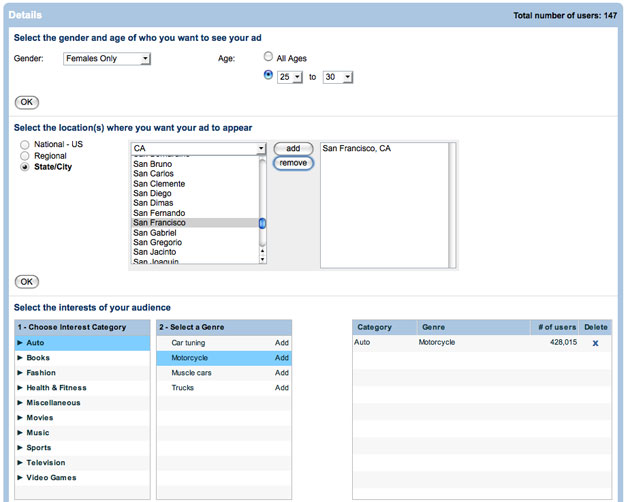
MySpace recently launched its self-serve advertisement platform, called “My Ads”. My Ads allows people put their configured target ads on it. People wonder whether My Ads would come to its “Google Moment”, a term that appears when Google applied its contextual advertising and became more than a great search engine.
There come the following features:
1, Images are allowed to be put onto the ads, including 728×90 or 300×250 pixels format. Facebook launched this kind of ads platform before, but there is no image allowed on those ads.
2, Those ads basically are charged by each visitor’s click, the same way as “Xing”, a platform that connects business people and use employment ads as the revenue source. My Ads also let the advertisers pay less if the ads’ click rate tends to be high.
3, MySpace focus on the target technology in order to create the most efficient advertising way for users. Based on its huge user number and the large amount activities and interactivities, MySpace could judge the users’ preference with 1,200 different ways to categorize each user. Facebook also could target ads, but very limited, only use the preference that set by users themselves.
Website CEOs must keep thinking about taking advantage of their sites’ special values. Facebook has its flexible communication ways and multiply function applications. MySpace has its large amount of user information. Other sites focus on their special fields and aim more accurately. How to make good use of those values and how to build a revenue machine? Let’s go on and see how the My Ads works in the future.
The 3.0 of OpenOffice.org are available now! If you want to download it, here is the entrance. >>Download<<. This just-released version provides eight languages support, including Danish, English, French, German, Italian, Japanese, Russian and Swedish. The speed of start-up is much faster than that of the previous versions. This kind of improvement is appreciated greatly. At the same time, OpenOffice 3.0 supports the file format of Microsoft Office 2007.(e.g .docx, pptx, xlsx). Certainly, There are other new features which are also very attractive.(>>click here for the release note<< ). Before 3.0 , there was a version named “PortTable”, it had already show the good performance. Particularly, you can save file directly as “pdf “ format. This feature released you from the trouble of files transformations a lot . However, that version had the same problem of other versions: slower start-up. Anyway, in the competition with Microsoft office, OpenOffice really did a good job and it is free for everyone.
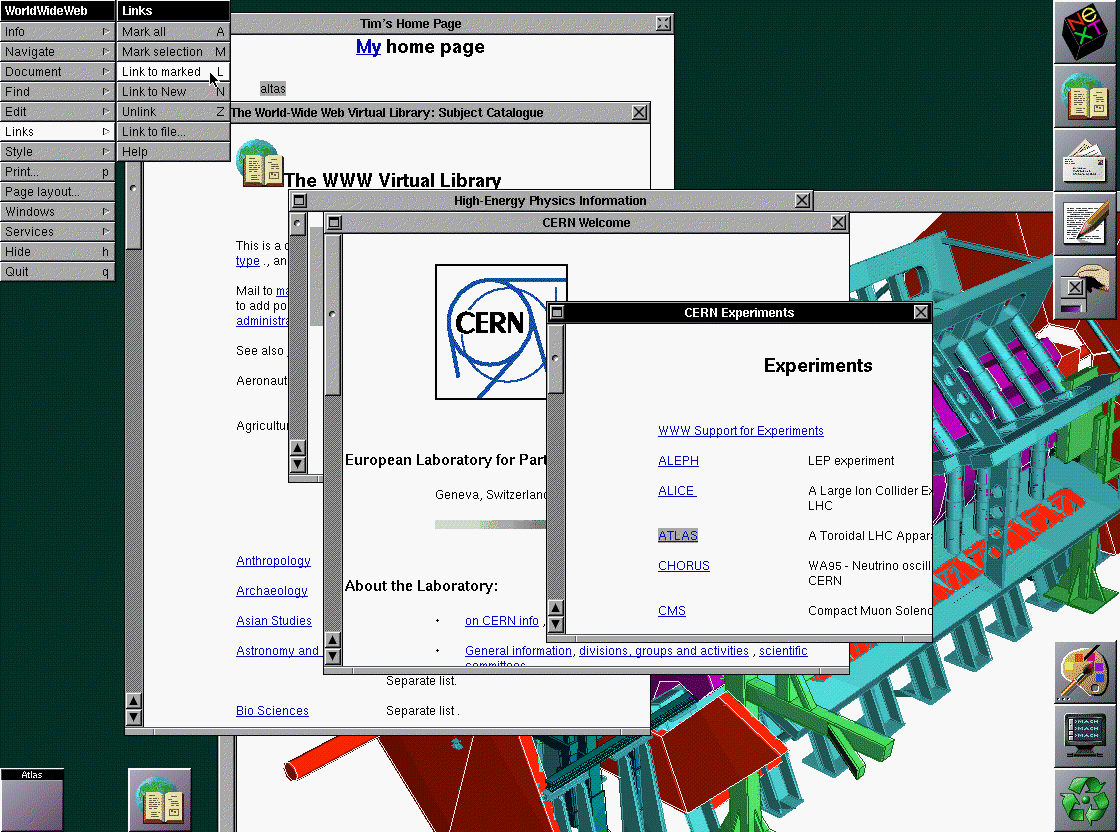
This blog is a small part of my effort to understand the WWW.I believe to comprehend something, it is very important to know its history: Where it all start from? How did it get the form it has today?
The answer to such questions helps to get better appreciation.
I decided to write about how did the first internet based information sharing (which was launched worldwide) look like (features)!
“In 1989 Tim Berners-Lee invented the World Wide Web, an internet-based hypermedia initiative for global information sharing while at CERN and wrote the first web client and server in 1990.”
How did it all begin?
Hypertext was used for several purposes but all of them were for reading the information off a hard media.
At CERN there was a need felt to have a system where all this information could be read off a network in a parallel fashion by several clients.
Features:
The product was intended to have the following minimum features.
1.Platform independent:
It was emphasized that the design be platform independent and can be used on any OS (although then there were just a few available compared to today).
2.Navigation :
The ease of navigation was one of the must haves which called for the following:
Structured architecture and use of Graphical tools.
History: Allows moving back and forth, going to a specific page etc.
Making navigation intelligent by implementing:
Documents rating by author, by number of clicks, by number of searches.
Search algorithm which is efficient both in terms of results as well as time
Indexing, node links and menu links were few others in the list.
3.Versioning:
The reason to employ the tracking versions was to make accountability possible. The previous and the current versions if stored in cache, could be compared and called for when required.
4.Multi-user:
Annotation: needed if reading and writing is done at the same time
Protection: prevent unauthorized users from reading and writing
Privacy : for users
5.Notification system:
Notify the users or clients on availability of new material, changes and other news.
6.Topology:
This takes care of the method in which hypertexts are going to be connected to each other.
After the above mentioned features were achieved, it became important that the systems that worked together need to agree at various points which included:
1.Naming and addressing:
“This is probably the most crucial aspect of design and standardization in an open hypertext system. It concerns the syntax of a name by which a document or part of a document (an anchor) is referenced from anywhere else in the world.”
2.Protocols:
HTTP related protocols that needed to be common among client and server : FTP, IMAP, MIME etc. For example FTP is the common file transfer protocol used.
3.Format of the document:
Basic format to be followed by all (must have format) which included 80-column text and basic hypertext.
Convertible format which allowed the conversion of the document into the format available at the client’s side. Thirds type is a negotiable format.
Hope this gives a better understanding internet as WWW is popularly known.
Refactoring has been used in software engineering for code understandability and maintainability. It also forms the inevitable part of software development cycle.
How about maintainability and usability of websites ?
The idea surely is exciting given the complexity of large business websites. It will be really useful to refactor navigation models (or design models) such that it becomes more user friendly, easy to maintain and understand. Web patterns which are analogous to design patterns used in software engineering are made use of in refactoring the websites.
Also, the idea of refactoring models (like navigation model) instead of entire (source) code was novel.
After reading some materials about google and google api, I wanted to try some of them by myself. It must be a very interesting experience. There are many APIs, as I mentioned before, in google code garden. At first, I want to have a look at search apis. What kind of search service does google api provide? If you browns from http://code.google.com/. You can find: * Google Book Search APIs, “Google Book Search is our effort to make book content more discoverable on the Web. You can easily and reliably integrate with this repository from your site, in a number of ways” * Google Code Search Data API “The Google Code Search data API allows client and web applications to search public source code for function definitions and sample code.” * Google AJAX Search API, “…lets you use JavaScript to embed a simple, dynamic Google search box and display search results in your own web pages, or use search results programmatically in innovative ways…” * Google Custom Search API “…enables you to search over a website or a collection of websites. You can harness the power of Google to create a search engine tailored to your needs and interests, and you can present the results in your website. Your custom search engine can prioritize or restrict search results based on websites you specify. ”
Ajax Search api is one of my interests. So I picked up this type of flower from the garden first. 1. Set up tomcat on my computer as the server. After inputting http://localhost:8080/ in the browser address box and click enter, you can see the test page of tomcat. This means the server run successfully on the computer. 2. Using “IPconfig” command in windows operation system, I checked out IP address of my computer. For example:100.100.100.100. Then input http://100.100.100.100:8080/ in the browser. This time the test page of tomcat should appear again. 3. Using the Ajax search API, you should get a Google AJAX API key. To get the key, which is free, a google account is needed. When you sign in with the account, google will ask you to provide the web site URL in which you want to integrate the search service. I think the mechanism of generating a key has some kind of relationship with the URL provided, because after the key is generated, it says: “This key is good for all URLs in this directory.” The directory is domain name you provided, something like http://www. Mybloger.com/. Since I didn’t have it, I substituted it with http://100.100.100.100:8080/. It is ok. 4. When I got the key, google also provided some code to start the experience. Those were some javascript codes, which can run on the static web pages. Copy the codes into a created html file, then save and put it into a subfolder of tomcat’s webapp folder. 5.I ran the html page on tomcat, then, a "search" page appeared on the computer finally! What I mentioned is a basic try of the API. You can edit codes to catch your own flavor. Google’s api documentation is the best choice in this case.
A few weeks ago it was announced that the Republican Vice Presidential pick had her email account accessed by an unauthorized person. This person was able to gain entry into her account by impersonating her. Her email address was hosted by Yahoo which provides a question/answer challenge using personal information about the account holder to retrieve a lost or forgotten password. The hacker was able to use the Internet to find this information and gain access into her account.
The hacker guessed that Alaska's governor had met her husband in high school, and knew Palin's date of birth and home Zip code. Using those details, the hacker tricked Yahoo Inc.'s service into assigning a new password, "popcorn," for Palin's e-mail account, according to a chronology of the crime published on the Web site where the hacking was first revealed.
This demonstrates one of the issues present with the Software as a Service model. Due to the centralized and globally accessible nature of SaaS applications it becomes difficult or impossible to limit access to the parts of the application that lie in front of the authentication mechanism. Yahoo was in this situation and made a decision to sacrifice elements of security to enhance the convenience of their mail system. Making it easier to retrieve lost credentials makes the regular customer happy but gives greater leverage for those malicious people to cause harm.
Companies that develop web applications have to make tradeoffs in the design of their products all the time. Security is something that should never be taken lightly though. In the case of Yahoo, it seems that their security decisions need some reworking.
It is challenging in the anonymous world of the Internet to confirm an identity. Most times, web applications implement password recovery procedures by sending a confirmation email to an address that is known to belong to the user. This is acceptable in most cases, but when the application is an email provider themselves it causes some issues.
It's week 6 now. CMPS 598 Co. has passed the initial "chaotic" stage. We have discussed topics such as e-commerce, business planning and mind maps, blue ocean strategy, needs analysis and evaluation. We have had seminars on interesting topics of Cloud Computing, Web Marketing and Q & A Websites. 8 innovative ideas have been developed in the format of mind maps, 60+ blog articles have been written.
After we have through this, (not really easy) process, now, what I see is a quite different team. Compare to the one that we had six weeks ago, this team is much stronger and capable, as they are more confident about themselves, understand more about each other; they have more experience on how to be innovative; they are willing to work hard toward their goal.
We are now transiting to the second stage. In this stage, students will be working in small groups and have some competition. Now, not only Innovation is important, effective collaboration and leadership also become critical.
Lets work together and create something new and valuable!!!
SCOUR Search Engine: Scour search engine is different from other search engines.A search engine is that which when a client types a query in it,executes it and then sends the resulsts to the client.It searches the local data base for the results.The queries may be anything.The results are links to various websites through which you can search your related answer.The result may not be exact but the it may some way in relative with the posted query.The things you can do: 1.You can create your own profile,customize your own search settings and various advanced settings. 2.Get all the search engines on one page and you can sort the links. 3.You can view the links obtained and select what ever link you want. 4.You can view the comments made by others about that link. 5.You can post your own comment about the link. 6.You can even check how each site is ranked in other websites. 7.You can vote a particular result and the more we vote ,the relevant the result becomes. This is scour search engine. Blogger website: In the blogger website we post some blogs related to a topic.It is read by other viewers.The discussion continues and then your blog may get comments from others. 1.You create your own account. 2.You post your blogs. 3.You can comment on others posts. 4.You may get comments for your blog. 5.You can start discussing about the blogs in the form of blogs.
The difference between a scour search engine and a blogger website is that the previous one is a search engine and the later a blog website.There are a lot of similarities between those two.Similarities means not in the functioning.In the extra facilities they provide such as providing comments,viewing comments,ranking etc. So my blog is nothing but it jus says that only the primary function between anything varies.All the extra applications we provide are somehow similar to other applications.
As Dr.Wu’s words in the last blog: user profile, their authored content, comments, rating and voting are five valuable aspects of SNS website. Those websites make good use of that information which is provided by their users are successful, because we need those information to communicate with friends, to know people’s idea, to understand the circle and the society, or to have fun. Then the site becomes popular and that kind of information comes in with a higher speed. Those are ways to lead the website to achieve a large number of users. What is the ultimate destination? I think that is commercial success, which means making profit. How can we make good use of the number of website users and make money? A common way is through the commercial advertisements. There are bunches of ways to make money from the commercial ads. How can Google makes so much money is still a myth, but I believe those ads they put on the right side of the search results, and its ads bar agent role are very important sources. Baidu’s ranked bid also brings a great deal of profits. Google, Baidu’s commercial ads are valuable and attractive to those service providers and commercial companies, because those sites have the large number of users from a particular social level or maybe some, and they have the targeted advertise strategy which make the ads more effective. They control the commercial information source and the commercial information destination, so they are paid directly and it is very reasonable. For those relatively small websites, they can serve their particular users. When narrow down the user scale, they can target their user’s need more accurately. “www.xing.com” is a website that connects the business people, both employers and employees. There is a service provided for users, is to help the employer user to find the right employee. Nowadays, it is very important to hire qualified employees for a company to get success in the business world. The employers should pay for their career information put on the service platform, an amount of money for other users’ each click. Because this site has its specific user scale, there is still chance for this site to compete with those internet magnates. Multi ways is available for a site to survive; all we should do is to find the right value of the site and make use of it to make profits.
There are more and more community websites, Social networks such as Facebook, MySpace, and LinkedIn, social bookmarking systems such as de.licio.us, social search engines such as scour.com, and many many others, digg, twitter, flickr, rollyo, ...
So, what's common about these sites? Here is what I found: these sites all try to collect some kind(s) of information from their users, manipulate it, and make it valuable to the user and other users. such information can be categorized into five categories:
1. User profile: Users' activities are recorded by the website. These records become valuable to others. For example, when a user saves a bookmark to his/her De.licio.us account. It is used by the site to identify popularly bookmarked site. 2. User authored content: A blog at blogspot.com, a picture at flickr, a customized search engine at Rollyo, ... These items are interesting to some readers and attract them to visit the website. 3. Reviews, Comments, Opinions: When you need reference, would like to know what others' experience about a restaurant or a movie theater, you may go to certain Website to find out what others said. 4. Rating and 5. Voting: At digg.com, you vote YES by "digg it" or NO by "bury it"; at scour.com, you give a rate to a search result to express your assessment to it's quality or relevance. These measures can been seen as quantified and/or simplified reviews/opinions.
As I was randomly making a choice upon my next topic for the blog this was the article written by Carol Kinsey Goman which dragged my attention.
A thorough understanding of the role that body language plays in our day-to-day business activities is vital, writes Carol Kinsey Goman in her very practical, management skill building book The Nonverbal Advantage: Secrets and Science of Body Language at Work. The author demonstrates the importance and necessity of reading and decoding non-verbal communication in a business environment. Carol Kinsey Goman recognizes the role that body language and subtle facial movements play in interpersonal communication. In a management setting, there is very often a distinct disconnect between the words being said, and the body language of the speaker. Fresh look teaches a crucial management skill for business people.
A business person who discerns the unspoken message of body language, can communicate more effectively with others in everyday business circumstances, and in the global marketplace as well. The book as mentioned by the author The Nonverbal Advantage: Secrets and Science of Body Language at Work by Carol Kinsey Goman, to any business person seeking to improve their understanding of nonverbal communication. With body language and unspoken cues being so much a part of personal interaction at all levels in the workplace, the ability to decipher those cues will create a more effective manager. Discovering the key to understanding that what is not said by others, may be more important than what they do say aloud. Instead of missing the crucial unspoken language of the eyes, face, and body, you will become fluent in their silent messages as well.
Recently many people have replaced their old phone with iPhone. IPhone is really a very petty girl. Everyone does not like her, but love her! However, when this Apple’s mobile fashion show just began, “Android”, a potential new noble of mobile phone will come into people’s eye, certainly, with Google’s suppot. You can call it gPhone, but there is actually no gphone, it is a platform!
Three years ago, Android was sold to Google. At that time, Android was a just a very small enterprise, which was 22 month old. I thought the founder-member of Android never reckoned their idea or effort would lead to Google’s attention at the beginning of building up their enterprise. And I also think this purchase is a big gift to the founders, since the magnate can provide so much funding, powerful technique support and market popularization.
I don’ know whether Gphone would replace Iphone. But the birth of Gphone relectets the great ambition of grasping the growth opportunities generated from the mobile ad market. Eric Schmidt, CEO of Google Inc, once said in public several times, that mobile market is the greatest opportunity for Google. There is an article named “Google still Dreaming of $ 50 Billion Mobile Ad Market”. Whether you believe it or not, that mobile mark will make much money is doubtless. Last time Neela gave us a nice presentation about “web marketing”. May be in the future, when the mobile market is really big. Many marketing strategies will be greatly developed based on big Mobile market.
I am a Computer Graphics student and am new to it. I managed to learn the basics. But it was very tough for me to dive into the world of graphics.
Internet is the best way I could get the tutorials for my subject. But here the problem lies. Its all text based tutorial explaining complicated steps. But what if I have a tutorial where I can watch & learn. That would be amazing.
Yes! what if, we can create a website which is a hub of interactive tutorials, where we can create,share and learn different tutorials. Interactive tutorials can help you have a deep understanding about your subject.
The website enables users to record desktop events from your computer, (or from a camera) so that it will be broad casted to internet. Any user can watch your tutorials any number of times. You can make your own tutorials like how to install a software, how to program with a particular language, how to troubleshoot etc.
More over we can also include chat clients so that users can chat on a particular tutorial, share knowledge and ideas. We can also promote this as a social networking site.
This is just a base idea. Suggestions will be appreciated.
Online services provide numerous incentives to use them. As compared with the traditional architecture, they can provide the following benefits:
They are accessible from any computer (provided an Internet connection)
Accessible through multiple formats (web browser, mobile phone, web services, etc...)
Centralized storage of data
It is the third point in the list is likely to raise some questions. When data is stored in a central location it usually implies that it is stored outside of the immediate reach of the customer. The customer, while having access to the data through the application, does not usually have complete freedom with their data. For instance, many applications require the use of a user name and password in order to access personal information. Each application can implement this authentication differently from all the others. In this case, users of the systems are forced to maintain separate identities for each service they use. There is also the fact that some data is likely to be similar between usages of multiple applications. For social networks, profile data about the user and lists of a user’s friends is all structured very similarly between the different networks. Wouldn't it be nice to be able to join a different social networking site and not have to worry about recreating your profile data or friends list?
“DataPortability is an effort by a group of volunteers and Internet application vendors to promote the capability to control, share, and move data from one system to another. DataPortability is the idea that users should be able to move, share, and control their identity, photos, videos and all other forms of personal data.”
The DataPortability initiative has received support from many big names in the industry such as Google, Facebook and Microsoft. This initiative is driven by the need to eliminate duplication of data input between the many online services by bringing together companies and existing standards in such a way that it makes transferring data from one web service to another as painless as possible. In the example given above about handling different user accounts between services, DataPortability embraces OpenID - a decentralized authentication mechanism. Web applications which support OpenID allow users to access their account through a single set of credentials that will work for any other application which supports it as well.
The movement towards web based companies embracing this concept of allowing the users to maintain a higher level of control over their data is a good thing as far as both the consumers and the companies are concerned. Making it easy to move data from one service to another empowers the customer to easily migrate to another service if they so choose while businesses will like the ease at which the customer can move data into their systems.
Ideas come from many places. Technology-minded people constantly think of software applications that they can develop. Or maybe a conversation with a local business owner will uncover a need that a new software application can address.
Before you shout, "Eureka," and jump into the development process, there are a few criteria you should consider before you make that step. In general, to have a successful commercial software (desktop, ASP, SaaS, etc.) product, the idea must meet three criteria:
Immediate Need - There must be a pain/need being experienced that the market needs addressed in the short term. You don't want to hear, "that's a nice idea, maybe we'll look at something like that next year."
Widespread Need - The pain/need must be experienced by a broad and definable group. It needs to be commonly experienced by more than just the person you are talking to.
Willingness/Ability to Pay - The market must be willing and able to pay to have this pain resolved; a budget must exist. Again, the person you are talking to may be willing to pay, but does the broader, defined market have the same willingness and ability?
So, when you come across a potential idea for a commercial software product, you need to ask many questions, and research the market, to determine how the idea fits with the above criteria. If the idea only fits one or two of the criteria, you will struggle to make it a success.
If the need is not immediate, the market will always put off the solution. It's not a priority.
If the pain is not widespread, then you don't have enough in your market to be profitable.
Even if the pain is immediate and widespread, if there is no budget available to pay for the solution, then you will obviously not be successful.
Non-Bias Approach
It is common to emotionally latch onto a "good" idea. You may think your idea is the greatest innovation to come along in a while. My advice is to ask yourself, "How many copies of this software do I plan to buy this year?" Your answer will always be "zero."
"Your opinion, though interesting, is irrelevant."
The only opinion that matters is the opinion of your potential customers and the broader market. You must, in an unbiased manner, conduct the needed research to ensure that the idea is commercially viable.
So, go back through all those ideas you have written down on those index cards and ask yourself some honest questions, ask more questions to your potential customers, research the market more, and let the cream float to the top.