This blog is a small part of my effort to understand the WWW.I believe to comprehend something, it is very important to know its history: Where it all start from? How did it get the form it has today?
The answer to such questions helps to get better appreciation.
I decided to write about how did the first internet based information sharing (which was launched worldwide) look like (features)!
Most part of this article is taken from the Original Designs and Issues associated with WWW.
“In 1989 Tim Berners-Lee invented the World Wide Web, an internet-based hypermedia initiative for global information sharing while at CERN and wrote the first web client and server in 1990.”
How did it all begin?
Hypertext was used for several purposes but all of them were for reading the information off a hard media.
At CERN there was a need felt to have a system where all this information could be read off a network in a parallel fashion by several clients.
Features:
The product was intended to have the following minimum features.
1. Platform independent:
It was emphasized that the design be platform independent and can be used on any OS (although then there were just a few available compared to today).
2. Navigation :
The ease of navigation was one of the must haves which called for the following:
Structured architecture and use of Graphical tools.
History: Allows moving back and forth, going to a specific page etc.
Making navigation intelligent by implementing:
Documents rating by author, by number of clicks, by number of searches.
Search algorithm which is efficient both in terms of results as well as time
Indexing, node links and menu links were few others in the list.
The reason to employ the tracking versions was to make accountability possible. The previous and the current versions if stored in cache, could be compared and called for when required.
4. Multi-user:
Annotation: needed if reading and writing is done at the same time
Protection: prevent unauthorized users from reading and writing
Privacy : for users
5. Notification system:
Notify the users or clients on availability of new material, changes and other news.
6. Topology:
This takes care of the method in which hypertexts are going to be connected to each other.
After the above mentioned features were achieved, it became important that the systems that worked together need to agree at various points which included:
1. Naming and addressing:
“This is probably the most crucial aspect of design and standardization in an open hypertext system. It concerns the syntax of a name by which a document or part of a document (an anchor) is referenced from anywhere else in the world.”
2. Protocols:
HTTP related protocols that needed to be common among client and server : FTP, IMAP, MIME etc. For example FTP is the common file transfer protocol used.
3. Format of the document:
Basic format to be followed by all (must have format) which included 80-column text and basic hypertext.
Convertible format which allowed the conversion of the document into the format available at the client’s side. Thirds type is a negotiable format.
Hope this gives a better understanding internet as WWW is popularly known.
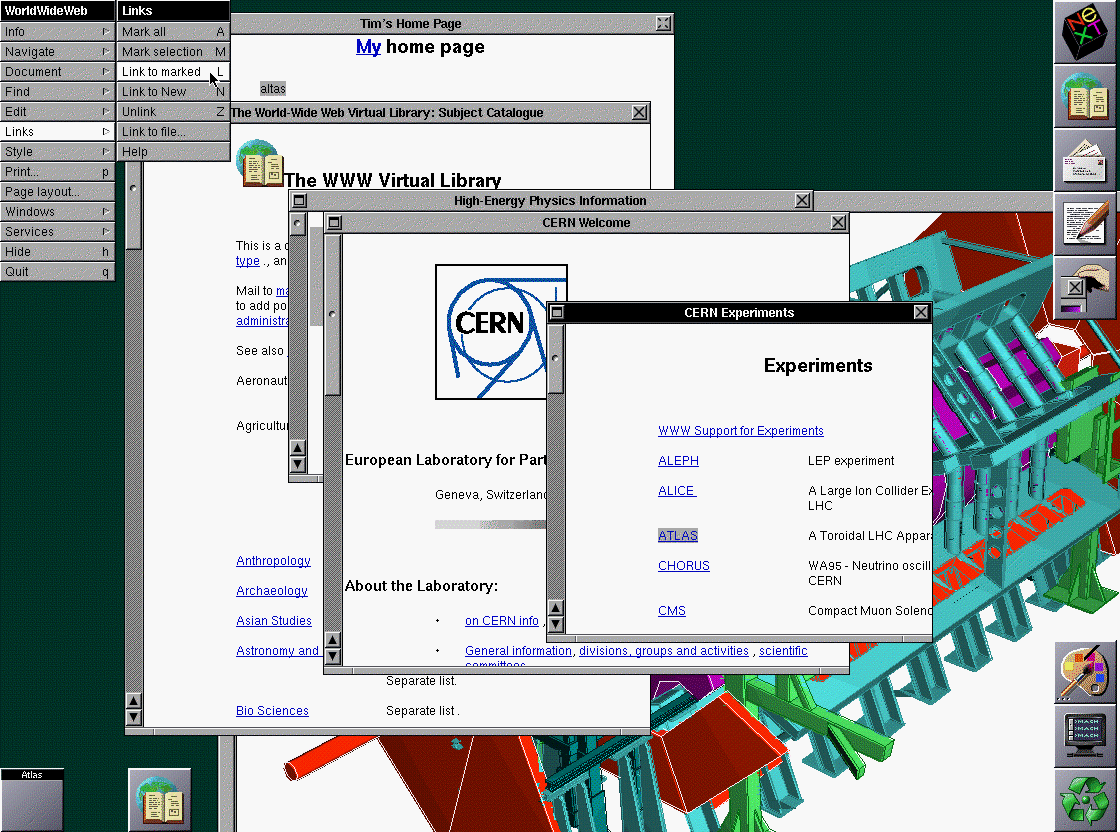
Screen Shot- The first browser by TBL

No comments:
Post a Comment